The Camondo family: from Constantinople to rue de Monceau, 1492 to 1944
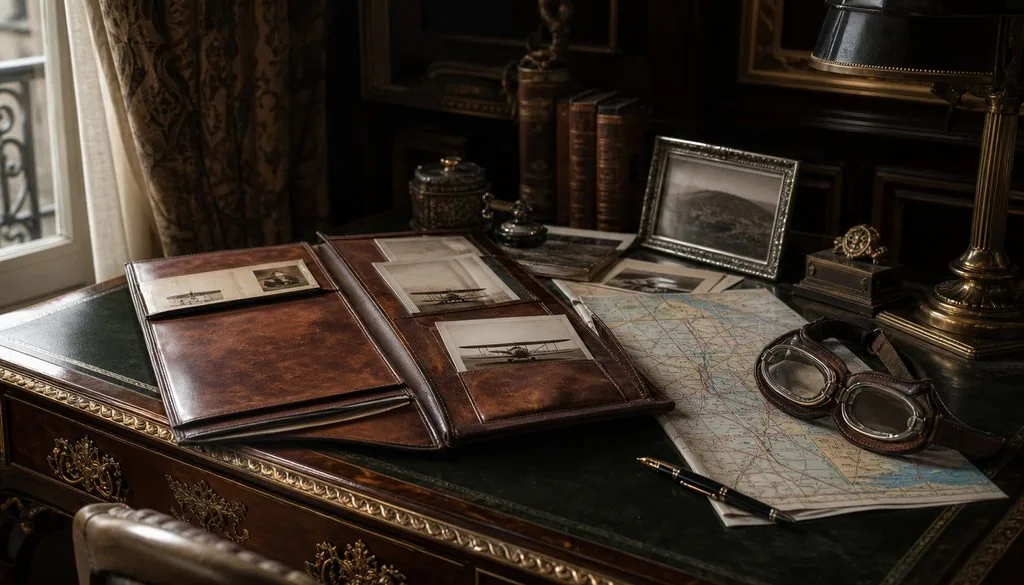
When I led groups through the house I saved the family for the last room, because once people know how it ends they stop looking at the furniture. It is the right order for a visit. On a page it can come first, and it should, because the house at rue de Monceau is not really about Sèvres porcelain. It is about a family that lasted four and a half centuries after leaving Spain and ended in a railway wagon.
Spain, Venice, Constantinople
The Camondos left Spain with the expulsion of 1492 and settled in Venice. When Venice fell to Austria in 1798 they moved again, to Galata in Constantinople, and there the family made its money. The bank Isaac Camondo & Cie was founded in 1802. Under Abraham Salomon Camondo it became the leading private bank of the Ottoman Empire and stayed so until the Imperial Ottoman Bank was created in 1863. In 1867 King Victor Emmanuel II of Italy gave the family a hereditary title of count, which is why a Sephardic banking dynasty from Galata carried an Italian title through the salons of the 8th arrondissement. The Camondo Stairs and the Camondo Palace still stand in Galata, Istanbul, if you ever want to see where the story was before Paris.
Paris, 1869
Abraham Salomon’s grandsons Abraham-Behor and Nissim moved the family to Paris in 1869 and built neighbouring houses at 61 and 63 rue de Monceau, on the edge of the park Haussmann had just redesigned. The Monceau quarter was where the new banking families built; the Ephrussi were a few doors up at no. 81, and Edmund de Waal’s Letters to Camondo is written from that vantage point. Both brothers died in 1889. The bank in Constantinople was closed in 1894 by Abraham-Behor’s son Isaac.
Isaac de Camondo and the Impressionists
Isaac (1851–1911) is the Camondo most art historians know first, and for a different collection. He bought Impressionists when it was still a slightly eccentric thing for a banker to do, and left them to the Louvre in a bequest of 1908; the rooms opened in 1914. Manet’s Le Fifre and Degas’s L’Absinthe were among them. Those paintings are now mostly at the Musée d’Orsay, so a visitor who wants to see what a Camondo collected while the house is shut can do it across the river, without knowing the name on the label came from the same family.
Moïse, Nissim, Béatrice
Nissim’s son Moïse (1860–1935) went the other way from his cousin and collected the French 18th century. He married Irène Cahen d’Anvers in 1891; the marriage ended in divorce. There were two children: Nissim, born on 23 August 1892 at Boulogne-sur-Seine, and Béatrice, born in 1894. Between 1911 and 1914 Moïse replaced his father’s house at no. 63 with the building that stands there now, the story told on the history page. Nissim, a reconnaissance pilot, was killed in aerial combat on 5 September 1917 near Leintrey, in Meurthe-et-Moselle. He was 25. The museum carries his name because his father asked that it should.
The end of the Paris line
Moïse died in 1935 and the house opened as a museum in December 1936. Béatrice de Camondo had married Léon Reinach and had two children, Fanny and Bertrand; the marriage had ended. Under the Occupation the four of them were arrested, held at Drancy and deported to Auschwitz, where they were murdered, in 1943 and 1944. Irène, the children’s grandmother, survived. Nobody else did. The house on rue de Monceau, given to France eight years earlier in memory of a son killed for France, was the only thing of the Paris Camondos left standing.
I do not have a neat sentence to put after that, and I distrust the ones I have heard. The house does the work. When it reopens, the first-floor rooms where Béatrice grew up will be exactly as they were, which is the point of the bequest and, now, the point of the museum.
Following the story while the house is closed
The Camondo ending belongs to a much larger Paris story, and the place to hear it told properly is the Marais. The small-group Jewish-history walk I have reviewed passes the exterior of the Shoah Memorial, where the names of those deported from France are recorded, and goes on through the rue des Rosiers streets before crossing to Montmartre. Guides on it are used to handling the subject with care; one reviewer, David, wrote that his guide “really knows the history of the area and deals with sensitive issues”. And for the family in their own street, the Monceau quarter is a walk you can take any morning.
Frequently asked questions
What happened to the Camondo family?
The son, Nissim, was killed as a pilot on 5 September 1917. The daughter, Béatrice, her former husband Léon Reinach and their children Fanny and Bertrand were deported from Drancy and murdered at Auschwitz in 1943 and 1944. The Paris branch ended with them; the house Moïse left to France in 1935 is their memorial. See the history page for the bequest.
Where did the Camondo family come from?
From Spain, which they left with the expulsion of 1492; then Venice; then, after 1798, Constantinople, where the bank Isaac Camondo & Cie was founded in 1802. They moved to Paris in 1869 and built at 61 and 63 rue de Monceau, described on the around the museum page.
Why were the Camondos counts?
King Victor Emmanuel II of Italy granted the family a hereditary title of count in 1867. Moïse de Camondo, who built the house, was the count the museum labels refer to; there is a page on Moïse.
Where are Isaac de Camondo’s paintings now?
Isaac left his Impressionists to the Louvre in 1908 and the rooms opened in 1914. Most of the paintings, Manet’s Le Fifre and Degas’s L’Absinthe among them, are now at the Musée d’Orsay, which is open while the house on rue de Monceau is not.
Is there a tour that covers the Camondo family’s story?
Not one that names them, since the house is closed. The Jewish-history walk through the Marais and Montmartre, which passes the Shoah Memorial, gives the wider story the family’s end belongs to; I review it on the tour review page.