What to see at the Musée Nissim de Camondo: room by room
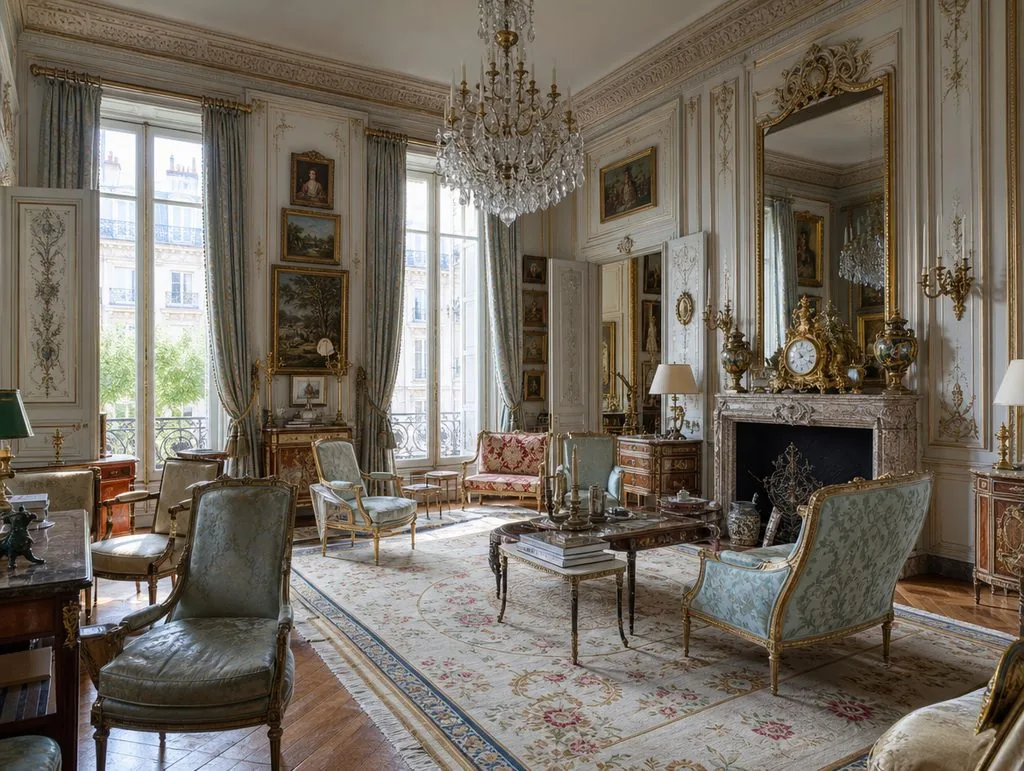
I am writing this from memory and from my old visit notes, because the house has been closed since August 2024 and nobody will walk these rooms again before the end of 2029. I have kept it in the present tense anyway. The bequest requires that everything go back where it was, so what follows is a description of the house you will see, not the house I saw.
Lower ground floor: the kitchens
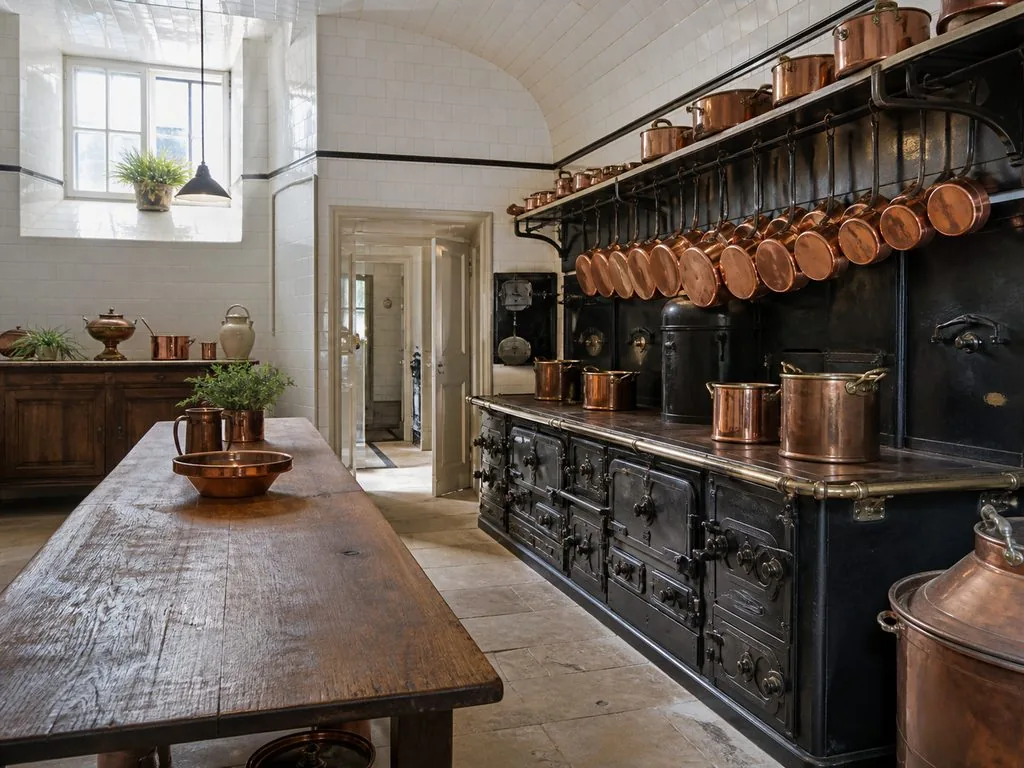
Most visitors go upstairs first and I understand why. I always started below. The kitchen wing was built to professional standards in 1914, and it has the scale of a restaurant kitchen rather than a domestic one: ranges, copper, a servants’ dining room where the staff ate, and the chef’s office with its pantry, where the day’s menus were settled. Nothing here is rare or valuable in the way the porcelain upstairs is rare and valuable, and that is exactly why I call it the most honest room in the house. It tells you how many people it took to keep one man’s 18th century running.
Upper ground floor: the reception rooms
The Grand Bureau is where the count worked and where the character of the collection is clearest: furniture by the great Paris cabinetmakers of the reigns of Louis XV and Louis XVI, among them Jean-François Oeben, Jean-Henri Riesener and Martin Carlin, with seating by Georges Jacob. Look at the floor as well as the furniture. The Savonnerie carpets were woven in 1678 for the Grande Galerie of the Louvre, which makes them older than everything else in the room and gives the house a direct line to Versailles that is not just a matter of style.
The Grand Salon holds the Aubusson and Beauvais tapestries, and paintings that reward slow looking: Hubert Robert’s ruins, Francesco Guardi’s Venice, a portrait by Élisabeth Vigée Le Brun. Off it, the Salon des Huet takes its name from Jean-Baptiste Huet’s pastoral panels, painted for a room like this one and set into the walls here; shepherdesses and sheep in soft light, which is not to everyone’s taste and was very much to the count’s.
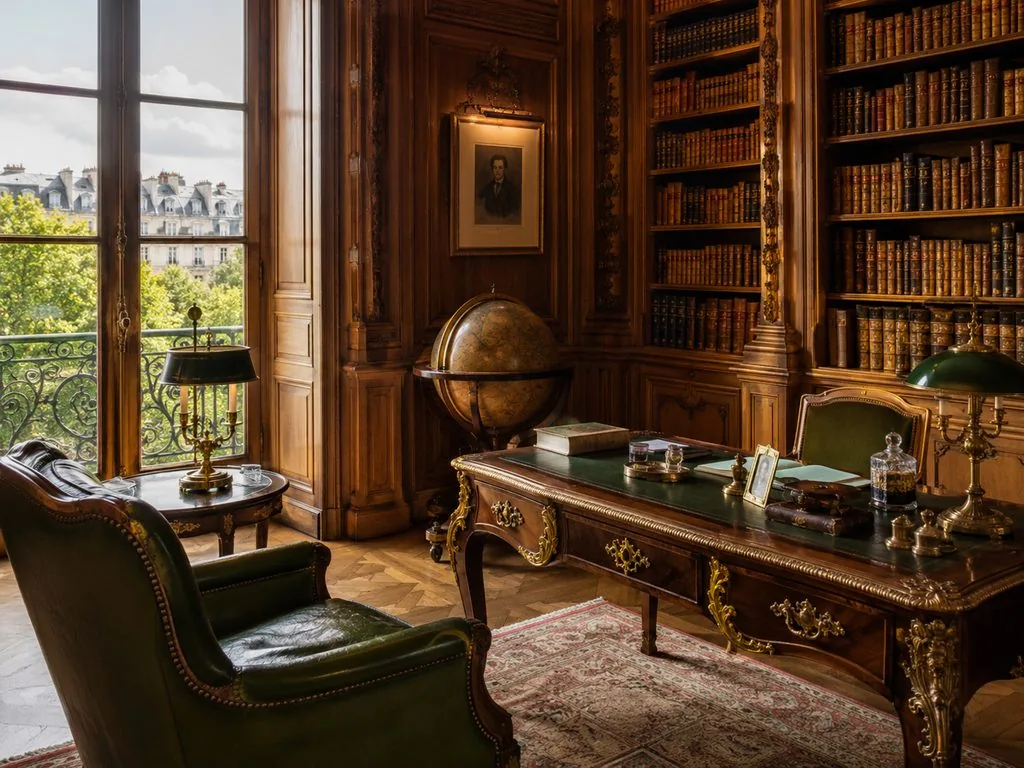
The Library is the room people linger in longest, partly because it is the one that feels most like a home. Then the Dining Room, laid as for a dinner, and beside it the Porcelain Room, which is where I would send anyone with only twenty minutes.
The Buffon service and the Orloff silver
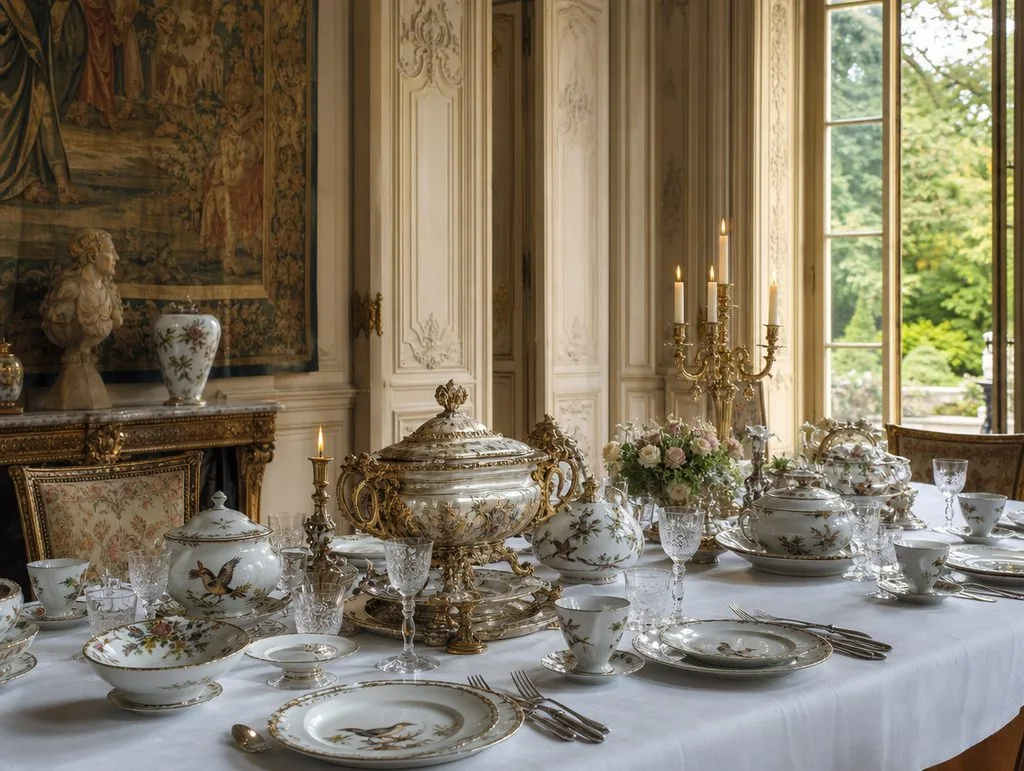
The Sèvres “Buffon” service dates from the 1780s and is decorated with birds after the plates of Buffon’s natural history, each piece a different species, named. It is the object most visitors ask about afterwards. The other great table piece is the Orloff silver service of 1770, commissioned by Catherine II of Russia for her favourite Count Orloff; that a Paris banker’s son ended up owning Russian imperial silver tells you something about how the 18th century circulated in the early 20th. Jean-Baptiste Oudry’s hunting scenes hang where a dining room would want them.
Royal pieces
Two small things with large provenances. There are chairs from Madame Élisabeth’s “Turkish cabinet”, Madame Élisabeth being the sister of Louis XVI. And there is a sewing table made for Marie-Antoinette’s private apartments, a modest object by the standards of the room it sits in and the one I would take home if the will allowed it, which it does not.
First floor: the private apartments
Upstairs the house becomes a home. Moïse’s apartment and Nissim’s are kept as they were, which after 1917 meant that Nissim’s was kept as it had been, a distinction the rooms make quietly. The blue drawing room is the softest room in the house. The bathrooms are the modern surprise: 1914 plumbing behind 1780 panelling. Anyone who has read about the family beforehand, on the family page or in de Waal’s letters, tends to slow down on this floor.
The garden and the park
The garden opens onto Parc Monceau, and the garden front is the side that most resembles the Petit Trianon. The outbuildings complete the picture of a working house. From inside the park you can still see this façade today, which is the one part of this page you do not have to wait for.
Where to see the same period now
The Musée des Arts Décoratifs on rue de Rivoli, run by the same institution, has French 18th-century period rooms and décor on view. It is a museum with cases rather than a house with chairs, and reviewers who expected more furniture and found more fashion and jewellery have said so; I put the honest framing on its page. If it is Oeben and Riesener you want and you cannot wait until 2029, it is the place to go.
When the house reopens, arrive ten minutes before the doors. Visitors who did that before the closure reported having the reception rooms almost to themselves for the first half hour, and the Porcelain Room is a different experience with nobody else in it. The how long to visit page has the timing.
Frequently asked questions
What is the Musée Nissim de Camondo famous for?
For being a complete house of French 18th-century decorative art kept exactly as its owner left it in 1935: furniture by Oeben, Riesener, Carlin and Jacob, the Sèvres “Buffon” service, the Orloff silver, Savonnerie carpets woven for the Louvre and Huet’s pastoral panels. The history page explains the bequest that kept it that way.
What is the Buffon service?
A Sèvres porcelain dinner service of the 1780s decorated with birds after Buffon’s natural history, kept in the Dining Room and Porcelain Room on the upper ground floor. It is the single object visitors most often ask about.
Can I see the kitchens?
When the house reopens, yes; the lower ground floor with the kitchens, servants’ dining room and chef’s office is part of the normal visit. Until the end of 2029 nothing inside is visitable, as the closure page explains.
Where can I see similar 18th-century furniture while it is closed?
At the Musée des Arts Décoratifs on rue de Rivoli, which the same institution runs and which is open; and, for the family’s other collection, the Impressionists at Orsay described on the family page.